28Jan

Explore the top 10 free resources to start learning guitar online today.

Top 10 Free Online Guitar Lessons for Beginners

Learning guitar has never been more accessible. With a phone, tablet, or laptop, you can start building real playing skills through structured beginner lessons, guided practice, and song based training. Free resources can be surprisingly effective if you choose them well, stay consistent, and follow a logical path, rather than jumping randomly between videos. This list focuses on free online guitar lesson platforms and channels that offer beginner friendly material, clear explanations, and progressions that can take you from your first notes to your first full songs.

To get the most from any free course, approach it like a music school program. Pick one main course to follow from start to finish, then use the others for extra explanations, technique fixes, and song ideas. In addition, set up a simple weekly routine, track the chords and techniques you know, and spend more time playing than searching for the next video.

Before you start, a quick beginner setup checklist

  • Use a tuner app, tune every time you play, and check tuning again after a few minutes because strings settle.
  • Sit or stand in a comfortable position, keep your fretting hand wrist relaxed, and do not squeeze too hard.
  • Start with short sessions, for example 15 to 25 minutes, and aim for daily consistency.
  • Use a metronome early, even at slow tempos, because timing is a core musical skill.
  • Learn chord changes as movements, not as static shapes, and practice switching slowly and cleanly.
  • Record yourself weekly, even on your phone, to hear progress in rhythm and buzz free sound.

1) JustinGuitar, Beginner Guitar Course (free)

JustinGuitar is one of the most popular free beginner guitar lesson resources online, and for good reason. The material is organized into clear modules, with practice routines, chord and strumming lessons, timing work, and beginner songs. The teaching style is friendly and practical, and the program is designed so that you always know what to learn next.

What makes this option especially useful is that it does not rely on a single viral video or quick tricks. It offers a genuine pathway. You learn essential open chords, common strumming patterns, how to change chords efficiently, and how to play along with songs. It also includes foundational topics like using a capo, reading chord boxes, and understanding basic rhythm values.

How to use it effectively

  • Follow the beginner course order. Avoid skipping to advanced songs until chord changes are clean.
  • Use the included practice schedules. Treat them like lesson homework.
  • Set a chord change goal, for example 30 clean changes per minute between two chords, and measure it weekly.
  • Spend time on basic rhythm. Strumming in time is often harder than learning chords.

Beginner milestones to aim for with this course

  • Cleanly fret A, D, and E major, then add G, C, and Em.
  • Strum steady downstrokes, then add common down up patterns.
  • Play two to five beginner songs end to end with consistent rhythm, even if tempo is slow.
  • Understand how to practice chord changes, not just chord shapes.

2) Marty Music, Beginner Guitar on YouTube

Marty Music is a huge channel with a lot of beginner friendly material, particularly centered around learning songs quickly. For beginners, learning songs early is motivating, and Marty often provides simplified versions that still sound musical. His approach tends to be practical and results oriented, which is ideal if you want to start playing recognizable riffs and chord progressions without getting overwhelmed.

While the channel is not a single linear course in the way a dedicated curriculum is, it offers plenty of beginner playlists, chord lessons, and song tutorials that can be used alongside a structured course. Marty is also good at explaining strumming patterns in straightforward language, which helps beginners avoid getting stuck on rhythm.

How to use it effectively

  • Pick songs that use the open chords you are currently learning, for example G, C, D, Em.
  • Slow down the video speed if needed, and focus on clean chord transitions.
  • Loop tough sections. Play two bars repeatedly until it feels automatic.
  • Use song learning as a reward after focused technique practice.

Great beginner outcomes from song based learning

  • Better chord change timing because songs force you to move on the beat.
  • Strumming becomes more natural because you copy real groove patterns.
  • Improved confidence, which increases practice consistency.

3) Fender Play free lessons and trials, plus Fender’s free YouTube content

Fender is known for its instruments, but it also produces high quality educational content. While Fender Play is often a paid system, Fender regularly offers free trial periods, free beginner lesson content, and a large amount of free material through its YouTube presence and blog style lessons. For a beginner, the appeal is the stage by stage approach, pro production, and a modern lesson style that can feel more like an app based learning experience.

Fender’s free content can help you with common beginner topics such as basic chords, simple riffs, string naming, tuning, right hand technique, and early music theory. This can be especially helpful if you enjoy a clean, structured presentation and want short lessons that feel doable in a busy schedule.

How to use it effectively

  • Use the free lessons to reinforce fundamentals like posture, picking, and chord clarity.
  • Pair it with a more expansive free course for practice routines and progression.
  • Focus on excellent tone early. The clean sound in Fender lessons can encourage proper technique.

Suggested focus areas for true beginners

  • Finger placement close to the fret for clean notes.
  • Relaxed right hand motion, small wrist movement rather than stiff arm strumming.
  • Switching between two chords in time, then building to three and four chord songs.

4) Andy Guitar, Free Beginner Lessons on YouTube

Andy Guitar provides a friendly beginner pathway with plenty of free videos that focus on core essentials. Many beginners struggle to know what to practice each day, and Andy’s approachable lesson flow helps reduce that uncertainty. The pacing is generally beginner appropriate, and the lesson style often includes repetition, recap, and practical tips to avoid common mistakes.

This is a good choice if you want lessons that feel like sitting with a teacher who keeps things simple. Andy also offers lots of beginner song lessons, which can keep your practice fun while still building technique. Some content may point toward paid courses, but there is enough free material for a beginner to build strong basics.

How to use it effectively

  • Work through beginner playlists in order, rather than picking random songs.
  • Write down the chords you learn and test yourself without looking after a few days.
  • Use his strumming lesson videos to build a small library of rhythm patterns.

Beginner practice plan using these lessons

  • 5 minutes, tuning and warm up, slow finger placement exercises.
  • 10 minutes, chord changes with a metronome, start slow and increase gradually.
  • 10 minutes, strumming patterns applied to the chord progression of a simple song.
  • 5 minutes, play the song through for fun, even if imperfect.

5) GuitarZero2Hero, Beginner Song Tutorials and Chord Foundations

GuitarZero2Hero is especially strong for learners who want to play songs as soon as possible, with clear video framing of both hands and careful explanation of chord shapes and strumming patterns. For beginners, seeing both hands clearly is vital, and this channel usually does that well. The tutorials frequently include simplified strums and easier chord options, which helps you get results quickly.

This resource is best used when you already know a few core open chords and want to expand your song list. It can also motivate you to practice rhythm, because each song requires timing that matches the original track. If you like learning by playing along, these lessons can be very effective.

How to use it effectively

  • Choose songs with chord sets you can already play cleanly, then gradually add new chords.
  • Practice the strumming pattern alone on muted strings before adding chord changes.
  • Use a simple rule, do not increase tempo until you can play the progression three times in a row without stopping.

What beginners learn quickly from this style

  • How common chord progressions sound in real music.
  • How steady down up strumming supports singing and melody.
  • How to simplify arrangements without losing the feel of a song.

6) Lauren Bateman, Beginner Guitar Lessons and Common Problem Solving

Lauren Bateman’s beginner lessons are well known for clear explanations and practical troubleshooting. Many beginners get stuck on the same issues, fingers hurting, muted strings, buzzing notes, slow chord switches, and confusing rhythm counts. Lauren often addresses these in a direct, encouraging way, with detailed tips that reduce frustration.

This is a strong option if you want a teacher who spells out the small details that make a big difference. Her lessons often emphasize consistency, efficient finger movement, and learning songs that are achievable for true beginners. It is a great supplement to a more linear course because it can help fix technique issues that slow down progress.

How to use it effectively

  • Search her channel for the specific problem you are facing, for example chord buzzing or strumming mistakes.
  • Apply one fix at a time. Do not try to change five things in one session.
  • Use slow practice and micro goals, for example cleanly fretting only the difficult chord for two minutes.

Common beginner fixes that matter

  • Thumb placement behind the neck, not wrapped tightly, to free your fingers.
  • Fret closer to the metal fret wire, not in the middle, to reduce buzzing.
  • Use minimal pressure. Press only enough to get a clear note.
  • Keep the strumming hand moving smoothly, even when you miss a string.

7) Paul Davids, Beginner Foundations and Musicality

Paul Davids is known for high quality teaching and musical content. While not all of his work is aimed at complete beginners, he has several free lessons that are extremely helpful once you have your first chords and basic strumming. His explanations can help you understand how guitar parts fit into music, and how to practice in a way that sounds musical rather than mechanical.

Beginners often learn a few chords and then feel stuck because their playing sounds plain. Paul’s beginner friendly topics, such as rhythm, chord progressions, simple fingerstyle patterns, and tone, can help you make your playing sound more like music. This can boost motivation and encourage longer term progress.

How to use it effectively

  • Use his lessons to add musical detail after you can switch between basic chords.
  • Focus on rhythm feel. Even simple chords can sound great with good groove.
  • Try one concept per week, for example a basic fingerpicking pattern or a new strum feel.

Beginner musicality upgrades

  • Learn to accent certain strums, not all strums are equal volume.
  • Use chord embellishments, for example adding a finger to create a suspended sound.
  • Practice dynamics, play softly then louder while staying in time.

8) Ola Englund and other technique focused channels, for picking, posture, and discipline

Some channels are not strictly beginner curriculums, but they contain free lessons and demonstrations that can help beginners build good technique habits early. Ola Englund is often associated with rock and metal, but the broader lesson here is that a technique focused approach teaches you about picking control, muting, posture, and practice discipline. Even if you want to play pop, folk, or acoustic music, the fundamentals of clean picking and controlled noise apply.

If you are a beginner who wants to play riffs, power chords, and heavier styles, exploring technique content early can help you prevent messy playing. If you are not interested in heavy music, you can still benefit from lessons on alternate picking basics, palm muting, and how to practice with a metronome.

How to use it effectively

  • Start slow, prioritize accuracy over speed, and always practice with a metronome.
  • Practice muting, learn to keep unused strings quiet with both hands.
  • Use short technique bursts, for example 5 minutes, to avoid tension and fatigue.

Beginner technique goals

  • Play a simple riff cleanly with consistent picking direction.
  • Mute unwanted string noise during chord changes and single note lines.
  • Keep shoulders relaxed, avoid hunching over the guitar.

9) Berklee College of Music, free guitar and music theory content

Berklee provides free educational content through articles, videos, and sample lessons that can introduce beginners to essential theory and musicianship. While it may not always be presented as a step by step guitar only course, it is valuable for understanding how music works. Many beginners can play chords but do not understand why certain chords work together, how to count rhythm reliably, or how scales relate to melodies. Berklee style content can fill those gaps.

For a beginner, the key is to keep the theory immediately practical. Learn just enough to support your playing. For example, understanding what a key is, how chord progressions are built, and how to count bars and beats will improve your ability to learn songs and play with others.

How to use it effectively

  • Pick one theory topic and apply it on the guitar the same day, for example building a major scale pattern.
  • Learn rhythm counting, clap rhythms first, then strum them on muted strings.
  • Connect theory to songs you already know, identify the key and the chord numbers.

Beginner theory topics that pay off quickly

  • String names and note names on the low E and A strings.
  • What a major scale is and how it relates to chords.
  • Roman numerals for chord progressions, for example I, V, vi, IV.
  • Basic rhythm values, quarter notes, eighth notes, and rests.

10) Ultimate Guitar, free chord lessons, song sheets, and practice tools

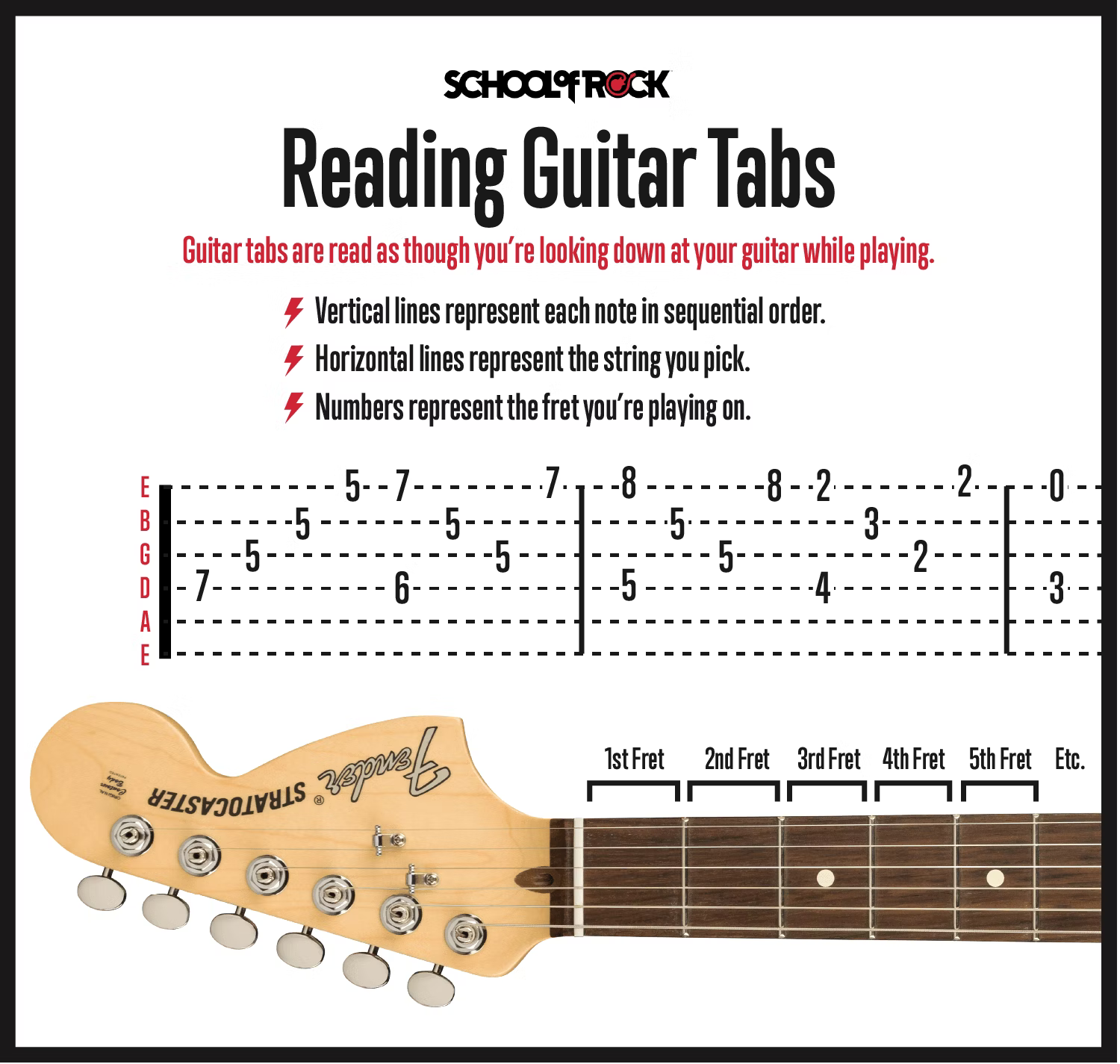
Ultimate Guitar is not a traditional lesson course, but it is a powerful free resource for beginners who want to play songs and build a repertoire quickly. The site and app provide chord sheets, tabs, and often simplified versions of songs. It also includes interactive tools in some cases, such as playback and tempo control. As a beginner, you can use this to practice chord changes in a real context, learn how songs are structured, and build confidence by playing through full arrangements.

The key with chord sheets and tabs is accuracy and selection. Not all user submitted content is perfect, and beginners can be misled by incorrect chords or odd strumming suggestions. However, if you choose popular official or highly rated versions, and cross check with your ears or a tutorial, you can get excellent results.

How to use it effectively

  • Choose songs that use mostly open chords, avoid barre heavy songs at first.
  • Use the transpose feature to move songs into easier keys, if available.
  • Practice in sections, verse only, then chorus only, then connect them.
  • Use a metronome or backing track to avoid drifting tempo.

Beginner song building strategy

  • Build a list of 10 songs that share similar chord sets.
  • Rotate them through the week. Repetition builds automatic chord transitions.
  • Add one new song every one to two weeks, not every day.

How to choose the best free online guitar lessons for your learning style

Free lessons vary in teaching style. Some are curriculum based and build skills step by step. Others are song based and focused on quick wins. Some emphasize theory, while others focus on feel and groove. There is no single best resource for every beginner, but there is a best combination for you.

  • If you want a complete roadmap, choose one structured course as your main path.
  • If you get bored easily, add one song tutorial per week as a fun project.
  • If you struggle with rhythm, prioritize teachers who count clearly and emphasize timing.
  • If you love riffs, add technique focused practice to keep picking clean and controlled.
  • If you like understanding the why, include some theory content that you apply immediately.

A simple 6 week beginner roadmap using free resources

This plan helps you avoid the common trap of learning a little bit of everything and mastering nothing. The details of which videos to use can come from the resources above, but the structure stays the same. Adjust tempos and difficulty to your comfort.

Weeks 1 and 2, chords and timing basics

  • Learn how to tune, hold the pick, and strum downstrokes evenly.
  • Learn A, D, and E major, and practice switching between them slowly.
  • Count 1 2 3 4 out loud while strumming muted strings.
  • Play your first two chord song or simple chord loop for one minute without stopping.

Weeks 3 and 4, expand chords and add strumming patterns

  • Add G, C, Em, and Am, one at a time, focusing on clean sound.
  • Practice one or two common strumming patterns, for example down down up up down up.
  • Learn two easy songs that use your chord set.
  • Start a simple finger exercise, for example 1 2 3 4 on each string, to improve coordination.

Weeks 5 and 6, confidence, transitions, and first performance skills

  • Practice chord changes with a timer, aim for smooth movement and minimal pauses.
  • Play along with a backing track or original recording at reduced speed if possible.
  • Learn a simple riff and a simple fingerpicking pattern for variety.
  • Record yourself playing a full song, listen back, and note one improvement for next week.

Common beginner mistakes when using free lessons, and how to avoid them

Free content is abundant, which is both the advantage and the risk. Without a plan, it is easy to waste practice time searching, comparing, and collecting tips without building consistent ability.

  • Jumping between too many teachers, fix this by choosing one main course and two supplements.
  • Practicing without timing, fix this by using a metronome or counting out loud daily.
  • Ignoring chord clarity, fix this by playing one string at a time to check each note rings.
  • Playing too fast, fix this by slowing down until you can play cleanly three times in a row.
  • Only learning shapes, fix this by learning one song per week to apply your chords.
  • Stopping when fingers hurt, fix this by taking short breaks and building calluses gradually, but avoid sharp pain.

Essential beginner skills to build alongside any free course

No matter which free lessons you choose, these core skills determine how quickly you progress. The best online lessons will reinforce them repeatedly, but it helps to keep them on your personal checklist.

  • Tuning and ear awareness, tune accurately, then learn to notice when a chord sounds off.
  • Clean fretting, use fingertips, keep fingers arched, avoid touching neighboring strings.
  • Efficient chord changes, keep fingers close to the strings, look for anchor fingers that can stay down.
  • Right hand consistency, keep a steady motion, use small movements, and avoid stiff elbow strumming.
  • Rhythm and counting, count beats, subdivide for eighth notes, and practice slow groove.
  • Practice structure, a little every day beats one long weekly session.

Beginner chord change drills that actually work

If you learn one thing from this article, let it be this, chord changes are the core mechanical skill of beginner guitar. Many players know the shapes but cannot move between them in time. These drills do not require paid programs, just consistency.

  • Perfect change drill, pick two chords, switch slowly, focus on perfect finger placement, do 20 slow changes.
  • One minute change test, set a timer for 60 seconds, switch between two chords in time, count clean changes, repeat weekly to track progress.
  • Anchor finger drill, find any finger that can remain on the same string and fret between chords, practice keeping it down.
  • Silent switching, switch chords without strumming, watch for unnecessary finger lifting, then strum once to check clarity.
  • Metronome movement, set a slow tempo, switch only on beat 1 of each bar, then tighten the gap by increasing tempo gradually.

Beginner strumming tips that make songs sound real

Strumming is not only about patterns, it is about feel. Beginners often strum every stroke the same, with no accents, and they stop their hand during chord changes. Better rhythm can make even two chords sound musical.

  • Keep your strumming hand moving like a pendulum, even when you do not hit the strings.
  • Accent the downbeat, usually beat 1 and sometimes beat 3, to create groove.
  • Practice strums on muted strings first, then add chord changes after the pattern feels easy.
  • Use a lighter touch. Many beginners strum too hard, causing harsh tone and timing issues.
  • Tap your foot. Physical pulse improves timing more than you might expect.

When to start barre chords, and how free lessons can help

Barre chords are a common beginner goal, but they can be frustrating if you start too early. You will progress faster if you first build open chords, basic rhythm, and finger strength from regular playing. Many free lessons teach barre chords, but choose a moment when your hands are ready.

  • Start barre chord work after you can comfortably play several open chord songs in time.
  • Begin with partial barre shapes, for example mini barres on two strings.
  • Use short daily sessions, two to five minutes, rather than long painful practice.
  • Focus on thumb position and wrist angle, and keep pressure minimal.

How to turn free lessons into real progress, a weekly practice template

Free lessons work best when you practice with a plan. Use this template and fill in the exact exercises from your chosen lesson source. This approach fits acoustic, electric, and classical style beginners.

  • Day 1, review chords, slow changes, learn a new strum pattern.
  • Day 2, practice one song section, verse or chorus, plus timing drills.
  • Day 3, technique focus, picking exercise or fingerpicking, plus chord clarity checks.
  • Day 4, song practice with metronome, then play along with recording.
  • Day 5, review everything, record a short performance, note one improvement point.
  • Day 6, light fun day, play favorite riffs, repeat easiest songs for confidence.
  • Day 7, rest or gentle review, hands recover and learning consolidates.

Final tip, build a small repertoire, not just a collection of exercises

Exercises build technique, but songs build musicianship. The best free online guitar lessons, whether structured courses or song tutorials, will help you play music quickly. Aim to have a set of five complete songs you can play from start to finish, even if slower than the original. Then grow to ten songs. This is how beginners turn practice into real ability.

Quick recap of the top 10 free online lesson resources

  • JustinGuitar, structured beginner curriculum with practice routines.
  • Marty Music, beginner friendly song tutorials and practical rhythm guidance.
  • Fender free lessons and YouTube, polished fundamentals and bite sized learning.
  • Andy Guitar, approachable beginner sequences and song based progress.
  • GuitarZero2Hero, clear song tutorials that build rhythm and chord fluency.
  • Lauren Bateman, excellent troubleshooting for common beginner issues.
  • Paul Davids, musicality, rhythm feel, and making simple playing sound great.
  • Technique focused channels like Ola Englund, picking, muting, and discipline for clean playing.
  • Berklee free content, beginner friendly theory and musicianship foundations when applied practically.
  • Ultimate Guitar, chord sheets and tabs for building a repertoire and practicing progressions.

With consistent practice and a clear learning path, free online lessons can take you from absolute beginner to confident player. Choose one main course, set realistic weekly goals, and keep your practice focused on timing, clean chords, and complete songs. Over time, the combination of structured lessons and song learning builds the strongest foundation for any style, from acoustic strumming to electric riffs.

28Jan

A comprehensive guide tailored for beginners diving into the thrilling world of saxophone playing.

Exploring the Joys of Saxophone: A Beginner's Guide

The saxophone is one of the most rewarding instruments a beginner can choose, because it offers an expressive voice, a clear pathway to meaningful progress, and a sound that feels instantly musical even with simple notes. Whether you are drawn to smooth jazz lines, pop hooks, soulful ballads, or energetic funk riffs, the saxophone can fit into countless styles. This guide is structured as a practical list of tips and points to help you start with confidence, avoid common early frustrations, and build habits that lead to steady improvement. If you are learning through mobile and online music tuition, the same fundamentals apply, you just need a plan and a supportive routine.

  • 1) Choose the right saxophone type for your goals and budget

    Most beginners start on the alto saxophone because it is relatively lightweight, widely available, and has a comfortable middle range that suits learning. Tenor saxophone is also beginner friendly, with a bigger mouthpiece and a deeper sound that many people love, but it can be heavier and a bit more demanding on breath. Soprano saxophone looks compact but can be difficult to play in tune, making it a less forgiving first choice. Baritone saxophone is powerful and fun, but large and costly, and it requires more air and physical support.

    To decide, consider the music you want to play, the physical size you can comfortably hold, and how easy it will be to transport to lessons. Alto is often the most practical for school band parts, beginner method books, and a broad range of styles. Tenor is a great pick if you are motivated by its classic voice in jazz, rock, and soul. If possible, try holding each instrument on a neck strap and pretending to play a few notes, even without sound, to see what feels natural.

  • 2) Decide between renting, buying used, or buying new

    Beginners often benefit from renting, because you can start quickly with a working instrument and swap sizes or models later. Renting can include maintenance support, which is valuable because saxophones have many moving parts and pads that can leak. Buying used can be an excellent value if the sax has been serviced and is from a reputable brand. Buying new can reduce uncertainty, but it is usually more expensive and not always necessary for a beginner.

    If you buy used, budget for a professional setup. Even a good sax can play poorly if pads leak or keys are misaligned. A simple check is to ask when the instrument was last serviced and whether the seller can provide paperwork. If you are learning online, consider asking your teacher to help you assess a listing or to recommend a trusted shop. A well regulated beginner saxophone can feel easy and encouraging, while a leaky sax can make even basic notes frustrating.

  • 3) Understand the basic parts of the saxophone and why they matter

    Knowing the instrument parts helps you communicate with teachers and technicians, and it helps you troubleshoot issues calmly. The main sections include the body, the neck, and the mouthpiece. The reed attaches to the mouthpiece using a ligature, and the mouthpiece and neck jointly influence response, tone, and tuning tendencies. Keys, springs, pads, and corks are the mechanical system that makes notes possible.

    Learn the names of the octave key, palm keys, side keys, left hand and right hand stacks, and the low note keys near the bell. You do not need to memorize everything immediately, but you should be able to describe where a problem occurs. For example, if low notes do not speak, you might mention the low C, B, or Bb keys near the bell, or a possible leak. If the mouthpiece slips, you might mention the neck cork.

  • 4) Start with a reliable beginner mouthpiece and reed setup

    Your mouthpiece and reed matter as much as the saxophone itself in the early stages. Many beginners do well on a standard student mouthpiece, because it is designed for stability and ease of sound. Avoid extremely open mouthpieces at first, because they can be harder to control and can encourage biting or tension. A modest tip opening paired with appropriate reeds helps you produce sound with less struggle.

    For reeds, beginners often start around strength 2 or 2.5, depending on mouthpiece and embouchure development. If the reed is too hard, you will feel like you have to force air and you may squeak or tire quickly. If it is too soft, the sound can feel thin and unstable, and articulation can become mushy. Reeds also vary by brand and cut, so treat reed strength as a starting point, not a fixed truth.

  • 5) Learn correct assembly and disassembly to protect your instrument

    Assembling the saxophone carefully prevents damage and reduces leaks. Begin by placing the neck strap on first, so you never hold the instrument without support. Gently insert the neck into the body, using a slight twist, and tighten the neck screw enough to hold it securely without over tightening. Put the mouthpiece on the neck cork with a slow twisting motion, never forcing it. If it is too tight, use cork grease sparingly.

    Put the reed on the mouthpiece with the flat side against the mouthpiece table, align it so the tip matches the mouthpiece tip closely, then secure with the ligature. When disassembling, remove the reed and store it flat, remove mouthpiece from neck, and separate neck from body. Never leave a reed on the mouthpiece for long periods, it can warp and it encourages hygienic issues. Treat the octave key mechanism on the neck gently, it is easy to bend.

  • 6) Build a beginner embouchure that is firm, not tight

    Embouchure is the way your mouth interfaces with the mouthpiece and reed. A stable beginner embouchure helps you control pitch, tone, and articulation without biting. Start by placing your top teeth on the mouthpiece, typically with a bit of mouthpiece cushion if it helps comfort. Your bottom lip should roll slightly over the bottom teeth to create a soft surface for the reed. Seal the corners of the mouth as if saying an oo sound, while keeping the chin gently flat rather than bunched.

    The biggest beginner trap is biting down to stop squeaks or to force high notes. Biting can choke the reed, distort pitch, and limit tone. Instead, aim for steady air and a balanced seal. If you are squeaking, it is often from too much mouthpiece in the mouth, an unstable embouchure, an unbalanced reed, or a rushed attack. A teacher can help you find the right mouthpiece placement, but a useful starting point is to play with enough mouthpiece that the reed vibrates freely, while maintaining control.

  • 7) Use the right breathing approach, think support and steadiness

    Saxophone rewards good breathing more than brute force. Focus on full, relaxed breaths that expand the lower ribs and belly area rather than lifting shoulders. When you play, imagine a steady column of air maintaining pressure behind the reed, like a consistent stream. Beginners often stop air when they tongue or change notes, which can cause notes to crack or feel bumpy. Practice breathing in for two counts and blowing out steadily for four, then six, then eight counts, without the instrument at first.

    When you play, keep the throat open, like a gentle yawn. If the sound is thin or pinched, check for tension in jaw, throat, and shoulders. A good beginner goal is to produce a clear tone at a moderate volume. You do not need to play loud to play well. A supported medium dynamic often sounds best and helps intonation.

  • 8) Make long tones your main early habit

    Long tones, sustained notes played with steady air and attention to tone, are the foundation of saxophone playing. They improve sound, stability, intonation awareness, breath control, and embouchure balance. Choose simple notes like G, A, B, then expand gradually. Start with 8 seconds per note, aiming for an even sound without wobbling. Rest as needed to avoid fatigue and tension.

    While playing long tones, listen for a centered sound. If the pitch sags, you may be losing support. If it sharpens, you might be biting or tightening. Use a tuner occasionally, but do not become obsessed with the needle. Instead, combine tuner checks with your ear. Record yourself and listen back, because the sound you hear while playing is different from what listeners hear in the room.

  • 9) Learn your first scale as a sound and a pattern

    Scales are not just finger drills, they are the alphabet of melody. Many beginners start with G major, F major, or C major, depending on instrument and method book. Learn one scale slowly, with a good sound, and memorize it. Say the note names out loud, then say the finger changes, then play it. This builds mental mapping between sound, name, and movement.

    Practice scales in small chunks, for example, the first four notes up and down, then add one note at a time. Use a metronome at a slow tempo, aiming for clean finger coordination and smooth transitions. When you can play a scale comfortably, start experimenting with simple rhythms and articulations, because musicality matters from day one.

  • 10) Understand basic finger technique, light touch, close keys

    Saxophone keys are designed for efficiency, you do not need to press hard. Use curved, relaxed fingers and keep them close to the keys. Lifting fingers too high slows you down and adds tension. Think of fingers as hovering rather than flying. Keep the thumbs in stable positions, left thumb on the thumb rest controlling octave key, and right thumb supporting the instrument on the thumb hook.

    Practice slow note changes that involve coordinated finger movement, such as G to A, A to B, and C to D. If a note does not speak, check that all required keys are fully down. Beginners sometimes leak notes by not sealing a key. The light touch approach might feel counterintuitive, but it promotes speed, control, and reduces hand fatigue.

  • 11) Learn articulation, tongue lightly, air never stops

    Articulation is how you start notes. On saxophone, most basic articulation uses the tongue to touch the tip area of the reed lightly and briefly, like saying too or doo. The air should remain steady, the tongue interrupts vibration, not the breath. A common beginner issue is tonguing too hard or too far back on the reed, which can produce a thud or cause squeaks.

    Practice simple repeated notes on one pitch, such as middle G, using quarter notes at a slow tempo. Aim for consistent attacks. Try both legato tonguing, where notes connect smoothly, and separated tonguing, where there is a clear space. If your tongue gets tired, take breaks. Small, efficient motions win. You can even practice tonguing without the sax by saying too too too at a steady tempo, focusing on minimal movement.

  • 12) Master the first octave and avoid rushing into high notes

    Many beginners want to play high notes quickly, but confidence comes from the middle register first. Learn notes from low Bb up through middle F or G with reliable tone. The octave key allows you to play higher versions of many notes, but it is not a simple on off switch, it interacts with voicing, air, and embouchure. When octave notes crack, it often means the embouchure is unstable, the air is not steady, or the sax has a leak.

    Work on octave transitions slowly, such as low G to octave G, then A to octave A. Keep the embouchure consistent and let the octave key do its job. Avoid biting to force the upper note. Over time you will develop voicing, the internal shape of the mouth and throat, which helps upper notes speak freely. A teacher can guide voicing with specific exercises, but the simplest approach is steady air and relaxed openness.

  • 13) Tune thoughtfully, learn how saxophone tuning actually works

    Saxophone tuning is influenced by mouthpiece position on the cork, temperature, reed strength, mouthpiece design, and how you blow. Beginners often try to fix intonation by moving the mouthpiece constantly, but the bigger factor is consistent embouchure and air. Still, you should learn the basic tuning method: warm up first, then check a mid range note like concert A on alto and tenor equivalents, depending on tuning reference, and adjust mouthpiece in or out slightly.

    Remember that saxophone is a transposing instrument. Alto is in Eb and tenor is in Bb, so the written note differs from concert pitch. Your tuner can be set to transposing mode, or you can learn the common reference notes for your instrument. Good tuning is not perfect tuning, it is flexible tuning where you adjust within music. Long tones with tuner checks, plus playing with backing tracks or a piano, builds real world intonation.

  • 14) Keep your saxophone in good condition with simple daily care

    Simple maintenance prevents many beginner problems. After each session, swab the body and neck to remove moisture. Moisture left inside encourages pad wear and can cause sticky keys. Wipe the mouthpiece with clean water and allow the reed to dry on a flat surface or in a reed case. If keys feel sticky, use proper pad paper or a clean piece of paper to gently blot, rather than pulling pads aggressively.

    Check screws occasionally, but do not over tighten. If a key is loose or noisy, a minor adjustment may be needed. Avoid bending springs or key arms. Keep the sax in its case when not in use. Do not leave it assembled on a stand in humid spaces for long periods, especially if you are not playing daily. A regular service schedule, such as a yearly checkup, helps keep the instrument responsive.

  • 15) Build a practice routine that fits your life, consistency beats intensity

    Practicing saxophone does not require hours every day to see progress. A consistent habit, even 15 to 30 minutes most days, can transform your playing. Structure helps, so you do not spend the whole time noodling. A simple routine might include breathing, long tones, a scale, a short technical exercise, and a piece of music. If you take mobile or online lessons, your teacher can tailor this to your goals and schedule.

    Break practice into small goals. For example, today you might focus on clean low notes, tomorrow on smoother octave changes, and the next day on articulation consistency. Keep a written practice log with tempo markings and notes about what improved. This adds accountability and helps you notice progress that might otherwise feel invisible.

  • 16) Use a metronome and count, rhythm is your shortcut to sounding musical

    Beginners often focus on notes and forget rhythm, but rhythm is what makes even simple melodies sound polished. Use a metronome at a comfortable tempo and count out loud when learning a new exercise. Start with steady quarter notes, then try eighth notes, then simple patterns like long short long short. If you rush during easy passages, slow down and make the beat feel grounded.

    Clap rhythms before playing them. If you can clap and count it, you can play it more quickly. When practicing with backing tracks, treat them as a musical metronome. Lock into the groove and listen for where your notes sit in the beat. Good rhythm makes your saxophone sound confident even before your tone is perfect.

  • 17) Learn to read music gradually, and connect notation to sound

    Reading music opens the door to method books, ensemble parts, and a wider range of lessons material. Start with basic staff awareness, learning where notes sit and how that relates to fingerings. Associate each note with a sound and a fingering, not just a symbol. Flash cards can help, but real improvement comes from playing short reading exercises daily.

    Work on reading in small doses to avoid overload. Pick a simple eight bar melody and read it slowly with a metronome. If you make mistakes, keep going and circle the problem spots. Then isolate those measures and repeat. Over time, your brain will recognize common patterns, such as stepwise motion and repeated motifs. This makes reading faster and more musical.

  • 18) Start improvising early, even with just three notes

    Improvisation is not reserved for advanced players. You can begin improvising within your first weeks by limiting your options. Choose three notes from a scale, for example, G, A, B on alto or tenor in written pitch, and play simple rhythms. Use a backing track in a comfortable key and explore call and response, play a short phrase, then answer it.

    Improvisation builds ear training, confidence, and creativity. It also improves technique because you practice transitions in a musical context. Do not worry about sounding like a professional. Aim to make phrases with a beginning and end. Leave space. Repeat a motif and vary one element, such as rhythm or direction. This is how real solos are built, one small idea developed over time.

  • 19) Develop your ear, sing, match pitches, and listen deeply

    Your ear guides tone, intonation, and phrasing. A simple ear exercise is to sing a note, then play it, then sing it again. Try to match pitch and timbre. Another exercise is to play a short phrase, then sing it back from memory, then play it again. This strengthens your ability to audiate, meaning to hear music internally.

    Listening is equally important. Spend time with great saxophone recordings and focus on one element at a time, such as tone, vibrato, articulation, or how they shape a phrase. Try to imitate small sections, even two measures. This is not copying in a negative sense, it is how musicians learn style. Over time, your own voice emerges from the combination of influences you absorb.

  • 20) Learn common beginner challenges and how to fix them

    Most early problems have simple solutions. If you squeak often, check reed placement, reed condition, and mouthpiece amount in your mouth. Make sure your embouchure is stable and your air is steady. If low notes do not speak, check that you are using warm, supported air and that the octave key is not accidentally pressed. Low notes also require the sax to seal properly, so consider a technician check if the problem persists.

    If your sound is airy, the reed might be too hard, too soft, or warped, or you might not be sealing at the corners. If you feel tired quickly, consider whether you are using too much pressure or playing reed strengths that are too resistant. If intonation is unstable, return to long tones and work with a tuner and drone. If your hands hurt, review thumb positions and strap height, and keep fingers light.

  • 21) Choose beginner friendly repertoire that keeps you motivated

    Music is the reason you practice, so pick pieces that you like and that fit your level. Folk melodies, pop tunes with simple ranges, and beginner jazz heads can all work. Choose melodies that stay mostly within one octave at first. If a song has tricky leaps or fast passages, simplify it. You do not have to play every note to be musical.

    A good repertoire plan might include one easy melody you can play beautifully, one exercise focused on technique, and one stretch piece that is slightly challenging. Rotate pieces regularly so you do not get bored. If you take online lessons, ask your teacher for arrangements in keys that suit your current finger knowledge. Playing real music also strengthens phrasing, breath planning, and expression.

  • 22) Understand expression tools, dynamics, vibrato, and phrasing

    Even as a beginner, you can shape phrases to sound expressive. Start with dynamics, playing softly and loudly while maintaining tone quality. Practice crescendos and diminuendos on long tones. Keep the sound supported at soft volumes, do not let it collapse. Next, explore phrasing, where you breathe and how you shape a musical sentence. Try to play a melody as if you are speaking it, with emphasis and direction.

    Vibrato is a common saxophone effect, but it should be approached carefully. Some styles use little vibrato, others use more. As a beginner, focus first on a straight, steady tone. When you are ready, ask your teacher for a guided vibrato approach, because uncontrolled vibrato can become a wobble that affects pitch. Expression comes primarily from time feel, tone, and phrasing, not from adding effects too early.

  • 23) Use technology wisely, recordings, apps, and online resources

    Technology can accelerate your progress when used with intention. Recording yourself is one of the best tools, because it reveals what your sound really does, including pitch, tone steadiness, and rhythm. Use a phone recorder and make short clips. Listen back and pick one thing to improve next time. This keeps practice objective and progress measurable.

    Apps can support tuning, metronome practice, and backing tracks. A drone app can help you train intonation by holding a reference pitch while you play long tones and scales. Slow down software can help you learn melodies by ear. Online videos can be inspiring, but be cautious of conflicting advice. A consistent approach guided by a teacher will help you avoid chasing quick fixes that do not match your needs.

  • 24) Learn how to practice effectively, isolate, repeat, and reintegrate

    Effective practice is a skill. When you make a mistake, avoid starting over from the beginning repeatedly. Instead, isolate the smallest unit that contains the problem, maybe two notes or one bar. Practice it slowly, then repeat it correctly several times. Gradually increase tempo. Then reintegrate it into the full phrase. This teaches your brain and fingers the correct movement.

    Use the idea of deliberate repetition, where each repeat has a focus, such as keeping fingers close, maintaining steady air, or aligning with the metronome. If repetition becomes mindless, take a break or change the focus. Many beginners improve faster with shorter, higher quality sessions than with long sessions where fatigue causes sloppy habits.

  • 25) Find your community, lessons, duets, and playing with others

    Saxophone is joyful on its own, but it becomes even more rewarding when shared. Playing with others improves timing, tuning, listening, and confidence. If you can, join a beginner ensemble, band, or casual jam. If you are learning online, you can still play duets with your teacher, record parts, or play along with backing tracks designed for saxophone.

    Lessons provide structure and feedback that is hard to replicate alone. A teacher can spot issues like biting, unstable tongue placement, or tension patterns before they become habits. Mobile lessons bring the convenience of learning in your own environment, where you practice daily, and online lessons offer flexibility and access to specialized teachers. The key is regular feedback and clear weekly goals.

  • 26) Set realistic milestones, celebrate progress, and stay patient

    Progress on saxophone is not linear. Some weeks you will feel like everything clicks, and other weeks you will feel stuck. The solution is to track small wins. Milestones might include playing a scale smoothly at a certain tempo, producing reliable low notes, reading a new rhythm pattern, or playing a full tune without stopping. Each milestone builds confidence and keeps motivation high.

    Be patient with tone development. A rich, flexible tone takes time because it is a coordination of air, embouchure, voicing, and listening. Avoid comparing yourself to professionals too early. Compare yourself to yesterday. If you practice consistently and maintain good fundamentals, your sound will open up in a way that surprises you.

  • 27) Explore styles and the unique joys each one offers

    Saxophone is at home in many genres. In jazz, you can learn swing feel, blues language, and improvisation. In pop and rock, you can play melodic hooks and energetic lines that sit well against guitars and vocals. In classical saxophone, you can develop nuanced control of tone and dynamics, as well as precise articulation and intonation. In funk and soul, you can explore tight rhythms, punchy attacks, and expressive bends.

    As a beginner, it helps to sample styles while keeping fundamentals consistent. One week you might learn a simple blues, another week a lyrical ballad, and another week a pop melody. Each style teaches different aspects of phrasing and sound concept. Over time, you will discover what you love most, and that will guide equipment choices, repertoire, and practice emphasis.

  • 28) Protect your body, posture, strap height, and avoiding strain

    Good posture makes playing easier and prevents discomfort. Stand or sit tall with relaxed shoulders. Adjust the neck strap so the mouthpiece comes to you, not the other way around. If you have to hunch or crane your neck, the strap is likely too low. Your head should be balanced, and the sax should rest comfortably with support from the strap and right thumb.

    Take breaks during practice, especially in the first months when facial muscles tire easily. If you feel pain, stop and reassess setup. Hand or wrist pain can come from excessive gripping or awkward thumb positions. Sometimes a different thumb rest position or a padded neck strap helps. If you play baritone or have back issues, consider harness options. Comfort supports consistency, and consistency produces results.

  • 29) Learn basic troubleshooting for reeds and mouthpieces

    Reeds are inconsistent by nature, and beginners can feel like some days the sax plays easily and other days it fights back. Often the reed is the reason. If the reed looks chipped, warped, or too dry, replace it. Rotate reeds so you are not using the same one every day. Soak a reed briefly before playing so it vibrates freely, but do not over soak it for long periods.

    Keep the mouthpiece clean. A buildup can affect response and hygiene. Use warm water and mild soap occasionally, and a mouthpiece brush if needed. Avoid hot water that can damage some mouthpieces. If your mouthpiece feels slippery on the cork, clean the cork and apply a small amount of cork grease. If it feels too tight, use less pressure and more twisting motion, and ensure the cork is not dried out.

  • 30) Create a simple 30 minute beginner practice plan you can repeat

    A repeatable plan prevents decision fatigue. Here is a practical structure you can adapt. Start with 3 minutes of breathing, without the sax, slow inhale and steady exhale. Then do 8 minutes of long tones, focusing on tone and intonation, and adding gentle crescendos. Next do 7 minutes of scales and finger coordination, one scale slowly with a metronome, plus a short pattern like 1 2 3 2 1. Then do 7 minutes of a melody or method book piece, focusing on rhythm and phrasing. End with 5 minutes of something fun, like improvising with three to five notes or playing along with a backing track.

    If you have less time, compress it. Even a 10 minute session can include 2 minutes breathing, 4 minutes long tones, and 4 minutes of a tune. The goal is daily contact with the instrument and weekly progress on fundamentals and music. Over time, you can extend the routine and add targeted work like articulation drills, octave exercises, and ear training.

  • 31) Know what good beginner tone feels and sounds like

    Beginners often ask whether they sound normal. Early tone can be bright, buzzy, or slightly airy, and that is common. A good beginner tone is primarily stable, centered, and free of constant squeaks. It should respond reliably when you start a note. The pitch should not wobble wildly, and the sound should not collapse immediately when you try to play softly.

    Focus on controllability rather than perfection. If you can play a long tone for eight seconds with consistent sound, that is a strong sign of progress. If you can start notes cleanly most of the time, that is progress. If you can move between notes without random squeaks, that is progress. Tone becomes richer as your air support, embouchure strength, and listening skills improve.

  • 32) Build confidence through small performances and sharing

    Performance is a skill, not a personality trait. You can build it gently by sharing short pieces with a friend, playing for family, or recording a weekly progress video for yourself. If you take lessons, ask for a mini performance goal every few weeks, like playing a tune all the way through at a comfortable tempo. The more you perform in low pressure ways, the less scary it becomes.

    When you perform, aim to communicate the melody and rhythm clearly. Do not apologize for mistakes. Keep going. This trains resilience and helps you enjoy the moment. Making music on saxophone is joyful because it is expressive, you are literally shaping breath into sound. Sharing that sound, even in small ways, often brings the biggest motivation boost.

  • 33) Keep curiosity alive, the saxophone is a lifelong instrument

    One of the greatest joys of saxophone is that it keeps opening new doors. In the beginning, you are learning how to make a stable sound and play in tune. Later, you explore style, articulation nuances, phrasing sophistication, and improvisation vocabulary. The same long tones you do as a beginner will still be useful years later, because they refine your sound concept and control. The scales you learn become tools for composing, improvising, and understanding harmony.

    Stay curious by setting rotating focus themes, such as a month of improving low notes, then a month of rhythm and articulation, then a month of learning songs by ear. Explore different artists and try to play along. Ask questions in lessons and keep notes. The saxophone rewards thoughtful effort, and it gives back a sense of voice and freedom that few instruments match.

  • 34) Final tip list recap for quick reference
    • Start on alto or tenor for the easiest beginner pathway.
    • Renting or buying a serviced used sax can save money and frustration.
    • Use a stable beginner mouthpiece and appropriate reed strength, typically 2 to 2.5 to start.
    • Assemble carefully, use a neck strap first, twist gently, protect the octave key.
    • Build a firm, relaxed embouchure, avoid biting.
    • Prioritize steady air, open throat, and breath support.
    • Do long tones daily, and record yourself often.
    • Learn one scale well, connect note names, fingerings, and sound.
    • Use a metronome, count rhythms, and clap before playing.
    • Start improvising early with limited notes and simple rhythms.
    • Swab after playing, care for reeds, and keep the mouthpiece clean.
    • Practice consistently in short sessions, isolate problems, repeat correctly.
    • Choose music you love, and shape phrases with dynamics and breath planning.
    • Play with others when possible, lessons accelerate progress and prevent bad habits.
    • Stay patient and curious, tone and control grow over time.
18Jan

Explore the top 10 free resources to start learning guitar online today.

Top 10 Free Online Guitar Lessons for Beginners

Learning guitar has never been more accessible. With a phone, tablet, or laptop, you can start building real playing skills through structured beginner lessons, guided practice, and song based training. Free resources can be surprisingly effective if you choose them well, stay consistent, and follow a logical path, rather than jumping randomly between videos. This list focuses on free online guitar lesson platforms and channels that offer beginner friendly material, clear explanations, and progressions that can take you from your first notes to your first full songs.

To get the most from any free course, approach it like a music school program. Pick one main course to follow from start to finish, then use the others for extra explanations, technique fixes, and song ideas. In addition, set up a simple weekly routine, track the chords and techniques you know, and spend more time playing than searching for the next video.

Before you start, a quick beginner setup checklist

  • Use a tuner app, tune every time you play, and check tuning again after a few minutes because strings settle.
  • Sit or stand in a comfortable position, keep your fretting hand wrist relaxed, and do not squeeze too hard.
  • Start with short sessions, for example 15 to 25 minutes, and aim for daily consistency.
  • Use a metronome early, even at slow tempos, because timing is a core musical skill.
  • Learn chord changes as movements, not as static shapes, and practice switching slowly and cleanly.
  • Record yourself weekly, even on your phone, to hear progress in rhythm and buzz free sound.

1) JustinGuitar, Beginner Guitar Course (free)

JustinGuitar is one of the most popular free beginner guitar lesson resources online, and for good reason. The material is organized into clear modules, with practice routines, chord and strumming lessons, timing work, and beginner songs. The teaching style is friendly and practical, and the program is designed so that you always know what to learn next.

What makes this option especially useful is that it does not rely on a single viral video or quick tricks. It offers a genuine pathway. You learn essential open chords, common strumming patterns, how to change chords efficiently, and how to play along with songs. It also includes foundational topics like using a capo, reading chord boxes, and understanding basic rhythm values.

How to use it effectively

  • Follow the beginner course order. Avoid skipping to advanced songs until chord changes are clean.
  • Use the included practice schedules. Treat them like lesson homework.
  • Set a chord change goal, for example 30 clean changes per minute between two chords, and measure it weekly.
  • Spend time on basic rhythm. Strumming in time is often harder than learning chords.

Beginner milestones to aim for with this course

  • Cleanly fret A, D, and E major, then add G, C, and Em.
  • Strum steady downstrokes, then add common down up patterns.
  • Play two to five beginner songs end to end with consistent rhythm, even if tempo is slow.
  • Understand how to practice chord changes, not just chord shapes.

2) Marty Music, Beginner Guitar on YouTube

Marty Music is a huge channel with a lot of beginner friendly material, particularly centered around learning songs quickly. For beginners, learning songs early is motivating, and Marty often provides simplified versions that still sound musical. His approach tends to be practical and results oriented, which is ideal if you want to start playing recognizable riffs and chord progressions without getting overwhelmed.

While the channel is not a single linear course in the way a dedicated curriculum is, it offers plenty of beginner playlists, chord lessons, and song tutorials that can be used alongside a structured course. Marty is also good at explaining strumming patterns in straightforward language, which helps beginners avoid getting stuck on rhythm.

How to use it effectively

  • Pick songs that use the open chords you are currently learning, for example G, C, D, Em.
  • Slow down the video speed if needed, and focus on clean chord transitions.
  • Loop tough sections. Play two bars repeatedly until it feels automatic.
  • Use song learning as a reward after focused technique practice.

Great beginner outcomes from song based learning

  • Better chord change timing because songs force you to move on the beat.
  • Strumming becomes more natural because you copy real groove patterns.
  • Improved confidence, which increases practice consistency.

3) Fender Play free lessons and trials, plus Fender’s free YouTube content

Fender is known for its instruments, but it also produces high quality educational content. While Fender Play is often a paid system, Fender regularly offers free trial periods, free beginner lesson content, and a large amount of free material through its YouTube presence and blog style lessons. For a beginner, the appeal is the stage by stage approach, pro production, and a modern lesson style that can feel more like an app based learning experience.

Fender’s free content can help you with common beginner topics such as basic chords, simple riffs, string naming, tuning, right hand technique, and early music theory. This can be especially helpful if you enjoy a clean, structured presentation and want short lessons that feel doable in a busy schedule.

How to use it effectively

  • Use the free lessons to reinforce fundamentals like posture, picking, and chord clarity.
  • Pair it with a more expansive free course for practice routines and progression.
  • Focus on excellent tone early. The clean sound in Fender lessons can encourage proper technique.

Suggested focus areas for true beginners

  • Finger placement close to the fret for clean notes.
  • Relaxed right hand motion, small wrist movement rather than stiff arm strumming.
  • Switching between two chords in time, then building to three and four chord songs.

4) Andy Guitar, Free Beginner Lessons on YouTube

Andy Guitar provides a friendly beginner pathway with plenty of free videos that focus on core essentials. Many beginners struggle to know what to practice each day, and Andy’s approachable lesson flow helps reduce that uncertainty. The pacing is generally beginner appropriate, and the lesson style often includes repetition, recap, and practical tips to avoid common mistakes.

This is a good choice if you want lessons that feel like sitting with a teacher who keeps things simple. Andy also offers lots of beginner song lessons, which can keep your practice fun while still building technique. Some content may point toward paid courses, but there is enough free material for a beginner to build strong basics.

How to use it effectively

  • Work through beginner playlists in order, rather than picking random songs.
  • Write down the chords you learn and test yourself without looking after a few days.
  • Use his strumming lesson videos to build a small library of rhythm patterns.

Beginner practice plan using these lessons

  • 5 minutes, tuning and warm up, slow finger placement exercises.
  • 10 minutes, chord changes with a metronome, start slow and increase gradually.
  • 10 minutes, strumming patterns applied to the chord progression of a simple song.
  • 5 minutes, play the song through for fun, even if imperfect.

5) GuitarZero2Hero, Beginner Song Tutorials and Chord Foundations

GuitarZero2Hero is especially strong for learners who want to play songs as soon as possible, with clear video framing of both hands and careful explanation of chord shapes and strumming patterns. For beginners, seeing both hands clearly is vital, and this channel usually does that well. The tutorials frequently include simplified strums and easier chord options, which helps you get results quickly.

This resource is best used when you already know a few core open chords and want to expand your song list. It can also motivate you to practice rhythm, because each song requires timing that matches the original track. If you like learning by playing along, these lessons can be very effective.

How to use it effectively

  • Choose songs with chord sets you can already play cleanly, then gradually add new chords.
  • Practice the strumming pattern alone on muted strings before adding chord changes.
  • Use a simple rule, do not increase tempo until you can play the progression three times in a row without stopping.

What beginners learn quickly from this style

  • How common chord progressions sound in real music.
  • How steady down up strumming supports singing and melody.
  • How to simplify arrangements without losing the feel of a song.

6) Lauren Bateman, Beginner Guitar Lessons and Common Problem Solving

Lauren Bateman’s beginner lessons are well known for clear explanations and practical troubleshooting. Many beginners get stuck on the same issues, fingers hurting, muted strings, buzzing notes, slow chord switches, and confusing rhythm counts. Lauren often addresses these in a direct, encouraging way, with detailed tips that reduce frustration.

This is a strong option if you want a teacher who spells out the small details that make a big difference. Her lessons often emphasize consistency, efficient finger movement, and learning songs that are achievable for true beginners. It is a great supplement to a more linear course because it can help fix technique issues that slow down progress.

How to use it effectively

  • Search her channel for the specific problem you are facing, for example chord buzzing or strumming mistakes.
  • Apply one fix at a time. Do not try to change five things in one session.
  • Use slow practice and micro goals, for example cleanly fretting only the difficult chord for two minutes.

Common beginner fixes that matter

  • Thumb placement behind the neck, not wrapped tightly, to free your fingers.
  • Fret closer to the metal fret wire, not in the middle, to reduce buzzing.
  • Use minimal pressure. Press only enough to get a clear note.
  • Keep the strumming hand moving smoothly, even when you miss a string.

7) Paul Davids, Beginner Foundations and Musicality

Paul Davids is known for high quality teaching and musical content. While not all of his work is aimed at complete beginners, he has several free lessons that are extremely helpful once you have your first chords and basic strumming. His explanations can help you understand how guitar parts fit into music, and how to practice in a way that sounds musical rather than mechanical.

Beginners often learn a few chords and then feel stuck because their playing sounds plain. Paul’s beginner friendly topics, such as rhythm, chord progressions, simple fingerstyle patterns, and tone, can help you make your playing sound more like music. This can boost motivation and encourage longer term progress.

How to use it effectively

  • Use his lessons to add musical detail after you can switch between basic chords.
  • Focus on rhythm feel. Even simple chords can sound great with good groove.
  • Try one concept per week, for example a basic fingerpicking pattern or a new strum feel.

Beginner musicality upgrades

  • Learn to accent certain strums, not all strums are equal volume.
  • Use chord embellishments, for example adding a finger to create a suspended sound.
  • Practice dynamics, play softly then louder while staying in time.

8) Ola Englund and other technique focused channels, for picking, posture, and discipline

Some channels are not strictly beginner curriculums, but they contain free lessons and demonstrations that can help beginners build good technique habits early. Ola Englund is often associated with rock and metal, but the broader lesson here is that a technique focused approach teaches you about picking control, muting, posture, and practice discipline. Even if you want to play pop, folk, or acoustic music, the fundamentals of clean picking and controlled noise apply.

If you are a beginner who wants to play riffs, power chords, and heavier styles, exploring technique content early can help you prevent messy playing. If you are not interested in heavy music, you can still benefit from lessons on alternate picking basics, palm muting, and how to practice with a metronome.

How to use it effectively

  • Start slow, prioritize accuracy over speed, and always practice with a metronome.
  • Practice muting, learn to keep unused strings quiet with both hands.
  • Use short technique bursts, for example 5 minutes, to avoid tension and fatigue.

Beginner technique goals

  • Play a simple riff cleanly with consistent picking direction.
  • Mute unwanted string noise during chord changes and single note lines.
  • Keep shoulders relaxed, avoid hunching over the guitar.

9) Berklee College of Music, free guitar and music theory content

Berklee provides free educational content through articles, videos, and sample lessons that can introduce beginners to essential theory and musicianship. While it may not always be presented as a step by step guitar only course, it is valuable for understanding how music works. Many beginners can play chords but do not understand why certain chords work together, how to count rhythm reliably, or how scales relate to melodies. Berklee style content can fill those gaps.

For a beginner, the key is to keep the theory immediately practical. Learn just enough to support your playing. For example, understanding what a key is, how chord progressions are built, and how to count bars and beats will improve your ability to learn songs and play with others.

How to use it effectively

  • Pick one theory topic and apply it on the guitar the same day, for example building a major scale pattern.
  • Learn rhythm counting, clap rhythms first, then strum them on muted strings.
  • Connect theory to songs you already know, identify the key and the chord numbers.

Beginner theory topics that pay off quickly

  • String names and note names on the low E and A strings.
  • What a major scale is and how it relates to chords.
  • Roman numerals for chord progressions, for example I, V, vi, IV.
  • Basic rhythm values, quarter notes, eighth notes, and rests.

10) Ultimate Guitar, free chord lessons, song sheets, and practice tools

Ultimate Guitar is not a traditional lesson course, but it is a powerful free resource for beginners who want to play songs and build a repertoire quickly. The site and app provide chord sheets, tabs, and often simplified versions of songs. It also includes interactive tools in some cases, such as playback and tempo control. As a beginner, you can use this to practice chord changes in a real context, learn how songs are structured, and build confidence by playing through full arrangements.

The key with chord sheets and tabs is accuracy and selection. Not all user submitted content is perfect, and beginners can be misled by incorrect chords or odd strumming suggestions. However, if you choose popular official or highly rated versions, and cross check with your ears or a tutorial, you can get excellent results.

How to use it effectively

  • Choose songs that use mostly open chords, avoid barre heavy songs at first.
  • Use the transpose feature to move songs into easier keys, if available.
  • Practice in sections, verse only, then chorus only, then connect them.
  • Use a metronome or backing track to avoid drifting tempo.

Beginner song building strategy

  • Build a list of 10 songs that share similar chord sets.
  • Rotate them through the week. Repetition builds automatic chord transitions.
  • Add one new song every one to two weeks, not every day.

How to choose the best free online guitar lessons for your learning style

Free lessons vary in teaching style. Some are curriculum based and build skills step by step. Others are song based and focused on quick wins. Some emphasize theory, while others focus on feel and groove. There is no single best resource for every beginner, but there is a best combination for you.

  • If you want a complete roadmap, choose one structured course as your main path.
  • If you get bored easily, add one song tutorial per week as a fun project.
  • If you struggle with rhythm, prioritize teachers who count clearly and emphasize timing.
  • If you love riffs, add technique focused practice to keep picking clean and controlled.
  • If you like understanding the why, include some theory content that you apply immediately.

A simple 6 week beginner roadmap using free resources

This plan helps you avoid the common trap of learning a little bit of everything and mastering nothing. The details of which videos to use can come from the resources above, but the structure stays the same. Adjust tempos and difficulty to your comfort.

Weeks 1 and 2, chords and timing basics

  • Learn how to tune, hold the pick, and strum downstrokes evenly.
  • Learn A, D, and E major, and practice switching between them slowly.
  • Count 1 2 3 4 out loud while strumming muted strings.
  • Play your first two chord song or simple chord loop for one minute without stopping.

Weeks 3 and 4, expand chords and add strumming patterns

  • Add G, C, Em, and Am, one at a time, focusing on clean sound.
  • Practice one or two common strumming patterns, for example down down up up down up.
  • Learn two easy songs that use your chord set.
  • Start a simple finger exercise, for example 1 2 3 4 on each string, to improve coordination.

Weeks 5 and 6, confidence, transitions, and first performance skills

  • Practice chord changes with a timer, aim for smooth movement and minimal pauses.
  • Play along with a backing track or original recording at reduced speed if possible.
  • Learn a simple riff and a simple fingerpicking pattern for variety.
  • Record yourself playing a full song, listen back, and note one improvement for next week.

Common beginner mistakes when using free lessons, and how to avoid them

Free content is abundant, which is both the advantage and the risk. Without a plan, it is easy to waste practice time searching, comparing, and collecting tips without building consistent ability.

  • Jumping between too many teachers, fix this by choosing one main course and two supplements.
  • Practicing without timing, fix this by using a metronome or counting out loud daily.
  • Ignoring chord clarity, fix this by playing one string at a time to check each note rings.
  • Playing too fast, fix this by slowing down until you can play cleanly three times in a row.
  • Only learning shapes, fix this by learning one song per week to apply your chords.
  • Stopping when fingers hurt, fix this by taking short breaks and building calluses gradually, but avoid sharp pain.

Essential beginner skills to build alongside any free course

No matter which free lessons you choose, these core skills determine how quickly you progress. The best online lessons will reinforce them repeatedly, but it helps to keep them on your personal checklist.

  • Tuning and ear awareness, tune accurately, then learn to notice when a chord sounds off.
  • Clean fretting, use fingertips, keep fingers arched, avoid touching neighboring strings.
  • Efficient chord changes, keep fingers close to the strings, look for anchor fingers that can stay down.
  • Right hand consistency, keep a steady motion, use small movements, and avoid stiff elbow strumming.
  • Rhythm and counting, count beats, subdivide for eighth notes, and practice slow groove.
  • Practice structure, a little every day beats one long weekly session.

Beginner chord change drills that actually work

If you learn one thing from this article, let it be this, chord changes are the core mechanical skill of beginner guitar. Many players know the shapes but cannot move between them in time. These drills do not require paid programs, just consistency.

  • Perfect change drill, pick two chords, switch slowly, focus on perfect finger placement, do 20 slow changes.
  • One minute change test, set a timer for 60 seconds, switch between two chords in time, count clean changes, repeat weekly to track progress.
  • Anchor finger drill, find any finger that can remain on the same string and fret between chords, practice keeping it down.
  • Silent switching, switch chords without strumming, watch for unnecessary finger lifting, then strum once to check clarity.
  • Metronome movement, set a slow tempo, switch only on beat 1 of each bar, then tighten the gap by increasing tempo gradually.

Beginner strumming tips that make songs sound real

Strumming is not only about patterns, it is about feel. Beginners often strum every stroke the same, with no accents, and they stop their hand during chord changes. Better rhythm can make even two chords sound musical.

  • Keep your strumming hand moving like a pendulum, even when you do not hit the strings.
  • Accent the downbeat, usually beat 1 and sometimes beat 3, to create groove.
  • Practice strums on muted strings first, then add chord changes after the pattern feels easy.
  • Use a lighter touch. Many beginners strum too hard, causing harsh tone and timing issues.
  • Tap your foot. Physical pulse improves timing more than you might expect.

When to start barre chords, and how free lessons can help

Barre chords are a common beginner goal, but they can be frustrating if you start too early. You will progress faster if you first build open chords, basic rhythm, and finger strength from regular playing. Many free lessons teach barre chords, but choose a moment when your hands are ready.

  • Start barre chord work after you can comfortably play several open chord songs in time.
  • Begin with partial barre shapes, for example mini barres on two strings.
  • Use short daily sessions, two to five minutes, rather than long painful practice.
  • Focus on thumb position and wrist angle, and keep pressure minimal.

How to turn free lessons into real progress, a weekly practice template

Free lessons work best when you practice with a plan. Use this template and fill in the exact exercises from your chosen lesson source. This approach fits acoustic, electric, and classical style beginners.

  • Day 1, review chords, slow changes, learn a new strum pattern.
  • Day 2, practice one song section, verse or chorus, plus timing drills.
  • Day 3, technique focus, picking exercise or fingerpicking, plus chord clarity checks.
  • Day 4, song practice with metronome, then play along with recording.
  • Day 5, review everything, record a short performance, note one improvement point.
  • Day 6, light fun day, play favorite riffs, repeat easiest songs for confidence.
  • Day 7, rest or gentle review, hands recover and learning consolidates.

Final tip, build a small repertoire, not just a collection of exercises

Exercises build technique, but songs build musicianship. The best free online guitar lessons, whether structured courses or song tutorials, will help you play music quickly. Aim to have a set of five complete songs you can play from start to finish, even if slower than the original. Then grow to ten songs. This is how beginners turn practice into real ability.

Quick recap of the top 10 free online lesson resources

  • JustinGuitar, structured beginner curriculum with practice routines.
  • Marty Music, beginner friendly song tutorials and practical rhythm guidance.
  • Fender free lessons and YouTube, polished fundamentals and bite sized learning.
  • Andy Guitar, approachable beginner sequences and song based progress.
  • GuitarZero2Hero, clear song tutorials that build rhythm and chord fluency.
  • Lauren Bateman, excellent troubleshooting for common beginner issues.
  • Paul Davids, musicality, rhythm feel, and making simple playing sound great.
  • Technique focused channels like Ola Englund, picking, muting, and discipline for clean playing.
  • Berklee free content, beginner friendly theory and musicianship foundations when applied practically.
  • Ultimate Guitar, chord sheets and tabs for building a repertoire and practicing progressions.

With consistent practice and a clear learning path, free online lessons can take you from absolute beginner to confident player. Choose one main course, set realistic weekly goals, and keep your practice focused on timing, clean chords, and complete songs. Over time, the combination of structured lessons and song learning builds the strongest foundation for any style, from acoustic strumming to electric riffs.

13May

guitar maintenance tips and advice

To keep your guitar in good condition, focus on regular cleaning, proper storage, and addressing humidityWipe down your guitar after each playing session, especially the strings and fretboard, and consider using a guitar-specific cleaner and polish. Store your guitar in a case, preferably a hard case, to protect it from physical damage and fluctuations in temperature and humidity. Acoustic guitars, in particular, are sensitive to humidity, so maintain a humidity range of 45% to 55%

25Apr

guitar choice

n many cases, it's "I like Joe Satriani. Joe Satriani plays Ibanez guitars. I'll buy an Ibanez".Sometimes its: "This guitar looks cool. I'll get that one"If you want to analyze things further, you can start looking as a flow chart:

  1. determine pickup configuration. Do you prefer humbuckers or single coils. Do you want HH, HSS, SSS, etc.
  2. Single or double-cutaway.
  3. Neck radius
  4. Budget (that might actually be element 0 in the list)
  5. Tremolo or Trem-o-no.
  6. quality
  7. feel
  8. looks
  9. etc.
guitar ibanex
19Apr

Understanding the Rhythm Guitar

To most new players, rhythm guitar may not sound as glamorous as lead guitar. That’s not to say that rhythm guitar can’t be fun, innovative, and packed with energy on par with even the most explosive lead guitar work! Rather, Rhythm guitar is a key part of a band’s rhythm section that propels the song, beat, and melody forward.A band’s rhythm section keeps time and gives the song its beat, slowing down or speeding up the tempo at critical times, working together as a unit. Made up of rhythm guitar, bass, drums/percussion, and piano/keyboards, each of these roles play a critical element in a band.While drums lay down the beat and timing -- as well as lending punctuation and fills to give a song drama, bass provides a bridge between rhythm guitar and the drums. Bassists define the bassline of a song, which doesn’t just provide a rhythmic pulse, but also stands as a series of notes that ties together the chords to a song to anchor the melody. Not all bands incorporate piano or keyboards into the mix, but when they do, these instruments look to drums and bass to provide the beat and play chords that lend melody and color to a song.Finally, rhythm guitar is the cherry on top of the rhythm section, layered over the very top of the drums and bass. Rhythm guitarists strum the chords that lay down the melody of a song, keeping time alongside the steady beat of the drums and bass. While the chords keep pace with the beat of the drums and beat, it’s the chord changes that add flavor to the song and give it “hummability.”

Understanding the Lead Guitar

When comparing lead vs rhythm guitar, an easy way to think of it is that rhythm players are primarily focused on chords while lead guitarists are focused on riffs and solos. A lead guitarist’s playing also echoes some of the vocal parts of the song, bringing the melody to the forefront.In instances where you have a lone guitarist holding down the role of rhythm and lead, they’ll likely play chords alongside those riffs and searing solos. However, some bands divide duties by having a lead guitarist focus solely on adding color and melody with riffs and solos, while a second rhythm guitarist provides the chords that layer over bass and drums. This can provide for a fuller, more layered sound within a band.

What's the difference between lead and rhythm guitar?

While lead and rhythm guitarists are both essential parts of a band, each role has different skill sets with some areas of overlap.Lead guitarists carve out some of the most memorable melodies of a song. That noodling riff that stands as the intro to Guns n’ Roses’ “Sweet Child o’ Mine”? The chunky, staccato power chord and nimble fingerwork opening riff to AC/DC’s “Back In Black”? The iconic riff and equally iconic solo on Ozzy Osbourne’s “Crazy Train,” played by the legendary Randy Rhoads? All prime examples of how a lead guitarist drives the melody of a song, using single notes alongside riffs and chords to make a song memorable.Here are some examples of the techniques that a lead guitarist may incorporate into their playing:• Guitar solos that incorporate a variety of techniques that add flavor to a song -- including string bendshammer-ons and pull-offs, and pinch harmonics.• Riffs that recur throughout a given song or piece of music. These can be a combination of single notes, chords, or two-note power chords.• Guitar fills that “fill” the space between chords. While many lead guitarists drive the melody, in instances where there’s both a lead and rhythm guitarist, a lead player may play strings of single notes that produce a cool countermelody and lend added interest and expression to a song. This is yet another of the benefits of having two guitarists in a band, giving a thicker, more complex sound.While lead guitarists often garner a lot of attention, that’s not to say that rhythm guitarists can’t be dynamic players, too. In fact, rhythm guitar is essential to a song, playing the chords that give a piece of music character. They’re a bridge between the steady hands of a band’s drum and bass rhythm section and the melody of a tune.Some of the techniques that a rhythm guitarist will regularly use include:• Chords and the ability to keep time in a song. A great rhythm guitarist will have a huge chord vocabulary and an understanding of not just what chords and versions of those chords will work in a song, but the ability to keep time and not either race ahead or lag behind, throwing off the pace of a song.• Arpeggio stylings that deconstruct chords and transform them into single notes. While this is arguably also a technique used by lead guitarists, rhythm players -- especially in instances where there is only one guitarist in a band -- can also make use of their chord vocabulary by breaking down each of those chords into single notes, alternating them with strummed chords to stay in the rhythm pocket while still adding interest to a song.• A variety of strumming techniques that lend emphasis to chords or create a different atmosphere in a song. From bluegrass-style fingerpicking to alternate strumming to downward strumming strokes on a guitar, a rhythm guitarist knows how each of these techniques work to add emphasis to particular chords at a precise moment in a song.

19Apr

Guitar tablature, usually referred to as “tab”, is a method of notating music that empowers beginner guitarists to learn songs quickly and easily. Guitar tabs share similarities with music staff notation by showing you what notes to play, how long to play them, and what techniques to use. But when compared to standard music notation, learning and reading guitar tablature offers a serious advantage: it shows you where to play the notes on your guitar. This comes in handy, especially since the guitar has many different places to play the same notes. For this reason, understanding guitar tablature and learning how to read tabs for guitar is particularly useful for beginners and allows students to learn how to play the guitar without ever having to learn how to read traditional musical notation.At School of Rock, we teach students how to read guitar tablature since it can show you both chords and single notes –– making it the fastest way to learn your favourite songs. It can also be an easier way to learn, since knowing how to read guitar tabs doesn’t require any special knowledge other than locating the strings and the frets on your guitar.If you’re ready to learn about what guitar tabs are and what they can be used for, you’ve come to the right place. Let’s get started.

19Apr

saxophone choice

Saxophone Alto or Tenor?

Should beginners start with a soprano or alto saxophone? The alto saxophone is easier to play than the soprano saxophone, and so it is a good choice for beginners. A simple comparison of the length of the soprano and alto saxophones shows that they are about the same, 70 centimeters long.Example Text

12Apr

guitar lessons and guitar tips and advice

Recently I've found lots of exercises that improved a lot my playing. Here are some of them:

  • On good habits: Hand stretching before playing. Here.
  • More good habits: Right hand warm up + CAGED chords by Paul Gilbert. Here.
  • On rhythm: Analyzing rhythm and learning from drummers by Paul Gilbert. Here.
  • On improvisation: How to improvise taking the most out of a single lick idea by Tom Hess. Here.
  • On ear training: "Guitar Simon" by EatSleepGuitar, aka u/circleof5surecanjiveHere.
  • On understanding songs: Everything in the YouTube channel Dean Olivet.
  • On soloing: How to use triads in solos by Jens Larsen, aka u/jenslarsenjazzHere.
  • Lots of resources by Garret Schmittling, aka u/gschmittling.
12Apr

guitar exercise's

Being a guitarist is a lot like being an athlete. A certain amount of practice has to go toward general maintenance of your playing on both a physical and mental level. You have to do exercises that will keep your skills in a state of readiness, so that when the time comes to go out and play you can do so in the best way possible. There are also times that you might need to regain a level of fitness after a period of inactivity.General fitness is even more critical if improvisation plays a role in your music, since you don’t know specifically what you’ll be playing when you solo. You have to be able to execute the ideas that come to you, whatever they might be. Being in shape makes is more likely you’ll be able to execute those ideas, rather than try and fail.Below, I’m going to go through some exercises that I do to either keep my lead playing and improvisation in shape, or to regain a level of fitness if I’ve been the musical equivalent of a couch potato.

Speed Exercises

First, I’ll demonstrate some exercises that will keep your fingers moving quickly.I personally choose to center my speed and technique exercises around scales rather than exercises that target more repetitive finger combinations. I figure, since I’m going to be using scales when I solo, I might as well keep the exercises as close to what I’m really doing when soloing.Since there are so many exercises out there that work on speed and technique, you have to be discerning in choosing a way of working on these things that is relevant to the music you will be playing. There are tons of scales out there, so you also have to be specific about which scales you choose to practice, unless you’re trying to put in 10 hour practice days. You should ask yourself:

  • What scales are you likely to be using in the music you play?
  • Which patterns of those scales are your strongest and weakest?

Your answers to these questions will tell you which scales to use for these exercises. For the examples I’ll give, I’ll just use this pattern of the C major scale:

12Apr

dificult f chord

Everyone faces his or her own unique set of challenges when learning to play the guitar. Some struggle with synchronizing their strumming hand with their fretting hand while others can’t seem to stretch their fingers far enough when playing chords. But there’s one topic where almost every guitarist faces adversity: the F chord. The F major chord is a particularly challenging chord to play on the guitar because it requires you to make a bar or mini-bar (we’ll get into this later), which makes it hard to execute cleanly. In this guide, we’ll be tackling the dreaded F major from just about every angle so you can master this unruly chord. Why Is The F Chord Important?Before we get into learning how to play the F major chord on the guitar, we need to talk about why this chord is so important. The F major chord is the fourth chord in the key of C major. The key of C major is one of the most commonly used keys on the guitar. This is because all the other chords in the key or easy to play and also because the key has no sharp or flat notes in it making it easy to use to learn music theory. With that being said, let’s get into the first and most common version of the F major guitar chord.How To Play The F Chord with JustinGuitar


Let’s begin by learning the full F major bar chords shape. Yes, this is a bar chord. A lot of players avoid bar chords for as long as possible when first starting out, but beginning to develop the strength and dexterity for these chords early on just puts you a step ahead of the rest. Here’s the shape:


This shape is the one you’ll be using the most long term but it can pose quite the challenge. Your best bet is to work on it while you also make use of some simplified versions of the chord as well. Then over time, this full bar chord F shape can take over the alternatives. When it comes to playing bar chords there are many tips for improving at them. We suggest you take a look at our Bar Chord Survival Guide for an in-depth walkthrough on all things bar chords. Simple F Major Chord Finding the F major bar chord to be a little tough? No problem. We can remove a couple of notes from the bar chord to make it easier to play. To play this shape you’ll need to use a mini-bar on the first two (high E and B) strings. Here’s what this shape looks like:


You might notice that this chord isn’t exactly easy to play either. The key to playing this shape is hand position. If you have any bad technique habits you’ll struggle to make all the strings ring out effectively.

Pull your elbow into your body and place your thumb on the back of the neck. Take a deep breath and release all the tension in your body as you breathe out. Position your fingers and squeeze down on the strings using the proper technique. Look at your fingers and make sure they are coming straight down on the strings. You want to make sure none of the fingers are touching any adjacent strings and stopping those strings from ringing out. And just so you know, these technique tips are helpful for playing any chord. If you find yourself struggling with a different chord in the future, be sure to come back here! This smaller F major chord is not going to sound quite as full as the F major bar chord. Most of the time, that’s okay. But if you want to make the whole full sound of the F chord you’ll need to learn how to play the bar version. F Major Triad If you know anything about how guitar chords are made, then you’ll know that a major chord consists of just three notes. The root, a major third, and a perfect fifth. Many chords we play on the guitar are simply repeating these three notes across a few octaves. So if we strip away all the extra supporting musical information, we can play a chord with just those three essential notes. With the F major chord, we’re playing the notes F (root), A (major third), and C (fifth). These three notes make up what we call an F major triad. You can find this triad shape in a few different places within the full chord shape but the most useful one looks like this:


This shape is incredibly easy to play because your hand naturally already sits on the strings in this position. You can see from the chord diagram above that the three unused strings will need to be avoided or muted when strumming. The amazing thing about this little triad shape is that it’s totally moveable! That means you can move this shape around the neck to play other major chords. This can really help you to move around the fretboard with some purpose. Just pay attention to the note name that the root (black) note lands on and you have the name of your major triad. If you move this shape up to the 7th fret, then the black note will be an A note – making it an A major triad.F Major 7


For the final F major chord alternative, we’ll be taking a look at this lesson by Ayla Tesler-Mabe. This F major 7 trick is considered a chord hack because even though we’re technically making the chord look and sound more complicated, the fingering is much easier. To play this chord shape, we’ll make the F major triad shape you learned earlier but allow the high E string to ring out. Doing this adds an E note to the chord. E is a major seventh above F and adding this note makes our F major and F major 7. Here’s the shape for you:


An F major 7 chord can be played in place of a regular F major chord in many cases. This is especially the case in the keys of C major and F major because they both contain E notes naturally. That allows this chord to fit into those keys diatonically. If you’re playing an F major outside of those keys, an F major 7 won’t always sound right. Use your ears and if it sounds right it is right.Bonus: The Ultimate Bar Chord AlternativeThe last alternative we have for you is a little bit unconventional. Playing over the top of the fretboard with your thumb allows you to have a little more flexibility with the rest of your fingers. A good way to think of it is as a fifth finger that can only be used to fret the low E and A strings. To use this technique you’ll need to switch up your fretting hand grip a little bit. Instead of placing your thumb on the back of the neck while you chord, you’ll need to grab the neck like a baseball bat. This allows your thumb to come over the top and reach those thicker strings. Be sure to check out the video to get more tips and tricks for this alternative bar chord technique. What’s Next?5 Easy Songs For BeginnersIn this lesson, Ayla Tesler-Mabe shares 5 easy songs for beginners on the guitar. You’ll learn how to play American Girl by Tom Petty, Bad Moon Rising by CCR, Hotel California by The Eagles, Like A Stone by Audioslave, and Little Lies by Fleetwood Mac. There are even downloadable PDF chord charts available for you.Changing Chords SmoothlyHere’s a lesson from Nate Savage that focuses entirely on tips and tricks for changing between simple guitar chords. Practice along to the downloadable MP3 jam track so you can master your chord transitions while having fun on the guitar.Want To Go Beyond Beginner? Have you ever thought about what it takes to take your guitar playing to that next level? In this lesson Ayla teaches you about the 3 big things you need to be focusing on to graduate from your beginner status on the guitar. 

12Apr

mandolin help and advice

Holding the MandolinYour mandolin should be balanced in such a way that you don’t have to struggle to reach any of the notes. Your right hand should be free to change your picking and strumming as necessary.The three main balance points are the left-hand thumb, which guides the neck of the mandolin gently skyward; the diaphragm, which acts as the central stabilizer; and the spot just below the inside of the right elbow, which anchors the instrument without restricting movement of the wrist or elbow needed for picking and strumming.Using a PickOnce you’ve balanced your mandolin, you’ll need to establish a functional picking technique. Curl your index finger and lay the pick across it, so that approximately ⅛” extends past your finger. Place your thumb flat across the face of the pick, firmly pressing it against the index finger. The flat bottom portion of the index finger (along the surface of the nail) and the bottom of the thumb should be parallel relative to each other as well as to the ground.When strumming chords, you’ll want to use a looser grip to allow the pick to glide smoothly across each string. When playing single notes, you’ll need a firm grip to drive completely through each doubled string, thereby producing a fuller tone.Fretting With AccuracyBecause the mandolin has four sets of doubled strings, you’ll need more finger pressure than you would with most guitars, ukuleles, and the like. That said, producing a quality tone is more about accuracy than strength.To ensure that each doubled string is sounded properly, hold the string down as close as possible to the fretwire without actually being directly on top of it. The contact point of the string to the fretwire is what actually produces the pitch that you hear (shortening the vibrating string to that point), necessitating left-hand accuracy.Producing Quality ToneNow that you know how to use the pick and the left hand, it’s time to put it all together. That means mastering pick technique on open strings (including string skipping) and incorporating fretted notes with scales and simple tunes.You’ll need to practice driving through each doubled string with upstrokes as well as downstrokes before adding fretted notes. Next you’ll want to try the first five notes of the G major scale, ascending and descending, using alternate picking throughout. Fret numbers are as follows: (4th string, “G”) 0, 2, 4, 5, 7. Once you’re able to play the first portion of the major scale ascending and descending on the G string, try the two-octave scale, which utilizes all four strings. Don’t forget to use your 4th finger.Now that you have these key tips on how to play mandolin, you’ve got all the tools you need to hit the woodshed. Have a blast!